So I've been wondering who'll be weighing in for the battle for our TVs. There are certainly some interesting prospects on the market at the minute, but I who will win and does there even need to be a winner? This feels different to a format war reminiscent of VHS vs Betamax or more recently (and on-going) HD-DVD vs Blu-Ray. It's more akin to the cable vs satellite vs freeview vs top-up-TV wars we've seen recently.
Both the cable and satellite offerings have pay-per-view content, while freeview generally doesn't. All of these offerings have recording options, although generally with cable or satellite you would have to use the operators set up box, with freeview you are free to choose from a variety of products, some with hard drives for recording.
Two more recent entries on the market are worth looking at further though. BT and Microsoft. BT have released Vision, which is a freeview recorder with pay-per-view capabilities. It looks as if BT have taken two interesting features from the above and merged them before the others had a chance. Get free digital channels, the ability to record programs and the option to purchase movies, TV shows and sporting events all without a contract and monthly fee.
So far so good, apart from the fact with BT Vision, as the content is delivered over the IP network it means you have to have a minimum broadband speed to cope with the streaming, and the way to do that is to have BT broadband. As a side note, to have BT broadband you need a BT land line, sorry all those who switched to cable.
It seems like a lot of competition, but let's not forget the software companies attempts. Well, I call them software companies, but if you have an Xbox 360 or Apple TV then that's hardware really isn't it?
Now in the UK you can download standard definition or high definition pay per view content. Its movies and TV shows at the minute with no sporting content signed up, but who knows what the future might bring. We've been able to download TV content from iTunes for a while now (well not really in the UK) and let's not forget the muted Amazon Unbox.
We're crossing into interesting territory now. With cable and satellite operators you need a billing relationship (and all that implies, i.e. address etc). With BT, you also need that, but have to buy into their other products. With iTunes, xBox 360 Live and Amazon Unbox you pay for what you use when you use it (or use pre-pay credits) and use them where ever you are signed in to the relevant hardware or software to view your content.
Are we living in a world where we increasingly don't need or want bundles? With mobile broadband from providers like 3, and wireless city meshes potentially driving out needing a cable run into your home for land line phone services and broadband, where digital TV is free and pay-per-view content available through a variety of sources be they games consoles, set top boxes or just over the web do consumers want to be tied into contracts and services they can only use in one place?
Saturday, December 29, 2007

Friday, December 28, 2007
SDPs and other acronyms
Acronyms have always filled me with fear ever since my university Software Engineering class where we'd read case studies but with the names changed in a humourous way, like SNAPPERS for an automated processed through a photography lab. What it stands for now escapes me, but leaves me frightened nether-the-less. The telco industry is filled with them, the software industry has plenty go spare too and I'm stuck in the middle.
After reading JPs recent entry about the word 'platform' now being an overloaded word, I remembered what the telco industry was currently going through. I get the impression sometimes that in the industry if it's not worth putting a committee together to solve a problem, then there is no problem.
Take your typical Service Delivery Platform (SDP), talk about a problem that doesn't need solving! SDPs are specific to the telco industry according to Wikipedia. But, why are they specific? If SDPs are so central to (and I cringe as I type this) 'Telco 2.0' why isn't anyone else doing it? Why can't I just buy one? For that matter, why isn't there an open source SDP I can run?
I really like Urmy's "complex is lots of simple" approach. I look at some of the newish companies coming out and they seem to have something in common. David James said something which stuck with me about making your product x, the best damm product x anyone has seen. Take Twitter for example, what they do is really good, and it's simple to use and code against.
When building a generic framework, I'd like to see lots of loosely connected, easy to use web APIs to make it so easy to plug an application together, you could build it before you had time to put a committee together. Yes, those newish start ups do have the luxury of having no legacy systems like telco's do, but that doesn't give anyone permission to shroud those legacy systems in the mysteries of acronyms.
After reading JPs recent entry about the word 'platform' now being an overloaded word, I remembered what the telco industry was currently going through. I get the impression sometimes that in the industry if it's not worth putting a committee together to solve a problem, then there is no problem.
Take your typical Service Delivery Platform (SDP), talk about a problem that doesn't need solving! SDPs are specific to the telco industry according to Wikipedia. But, why are they specific? If SDPs are so central to (and I cringe as I type this) 'Telco 2.0' why isn't anyone else doing it? Why can't I just buy one? For that matter, why isn't there an open source SDP I can run?
I really like Urmy's "complex is lots of simple" approach. I look at some of the newish companies coming out and they seem to have something in common. David James said something which stuck with me about making your product x, the best damm product x anyone has seen. Take Twitter for example, what they do is really good, and it's simple to use and code against.
When building a generic framework, I'd like to see lots of loosely connected, easy to use web APIs to make it so easy to plug an application together, you could build it before you had time to put a committee together. Yes, those newish start ups do have the luxury of having no legacy systems like telco's do, but that doesn't give anyone permission to shroud those legacy systems in the mysteries of acronyms.
hReview use for music ratings
After my previous post on various music web sites and they work out for me, PSD left a comment pointing to the microformats site, and more specifically hReview.
What I'd really like to do is be able to traverse my music collection and build up a hReview page of where I've given a rating to songs and albums. What would be cool, would be to then import that into those music sites so my musical tastes are syncronized (and no, not the album by Jamiroquai).
What I'd really like to do is be able to traverse my music collection and build up a hReview page of where I've given a rating to songs and albums. What would be cool, would be to then import that into those music sites so my musical tastes are syncronized (and no, not the album by Jamiroquai).
Saturday, December 22, 2007
Twitter as a messaging platform
When you have an itch, scratch it!
Well, that's what I've started to do. My itch is a common one in the UK and probably throughout Europe and certain parts of the world, but when you generalise it, it becomes a problem that nearly every one has. When there's a certain piece of information that I want to know as it happens, how do I find that out?
For me, it's Arsenal scores. I'm a big Arsenal fan, and unfortunately I don't get to see many games live (other wise I might not have this problem). As much as Arsenal play on TV, I often don't get a chance to see that either, I don't subscribe to Sky or cable, so I'll pop to the pub. Anyhoo, I want to know when there's a change of score, and I want to know the final score of all Arsenal games. So what did I do about it?
Let's put that question to one side for now and look at Twitter. I've been using Twitter for a few months and I'm lovin' it! One of the key points here is that it's a pulling mechanism of messaging. You have to 'follow' someone to view their updates but you can view those messages on the web, through RSS, third party applications (using the Twitter web API or RSS) or through SMS.
Let's get back to the question at hand. The Beeb has a great website for sport, particularly their refreshing latest score pages. Although not RSS, which is a shame, the page is formatted nicely, so writing an application to extract key data is pretty simple. Twitter can then be used to post that data too and anyone, myself included, can subscribe that information in my preferred means.
Looking back at the little application I wrote, it's screamingly obvious that with easy to use web APIs all you have to do is write some plumbing code to do what you want to do and scratch that itch that's been irritating you.
So far, I've created users on Twitter for Arsenal, Birmingham and Manchester Utd.
Soon, I'll be creating users for all Premiership clubs and pushing this a little more. Let me know if you have an itch (or well, at least a team you'd like to follow, it can be any team that has a live scores page from the BBC Sport Football website), let me know =)
Well, that's what I've started to do. My itch is a common one in the UK and probably throughout Europe and certain parts of the world, but when you generalise it, it becomes a problem that nearly every one has. When there's a certain piece of information that I want to know as it happens, how do I find that out?
For me, it's Arsenal scores. I'm a big Arsenal fan, and unfortunately I don't get to see many games live (other wise I might not have this problem). As much as Arsenal play on TV, I often don't get a chance to see that either, I don't subscribe to Sky or cable, so I'll pop to the pub. Anyhoo, I want to know when there's a change of score, and I want to know the final score of all Arsenal games. So what did I do about it?
Let's put that question to one side for now and look at Twitter. I've been using Twitter for a few months and I'm lovin' it! One of the key points here is that it's a pulling mechanism of messaging. You have to 'follow' someone to view their updates but you can view those messages on the web, through RSS, third party applications (using the Twitter web API or RSS) or through SMS.
Let's get back to the question at hand. The Beeb has a great website for sport, particularly their refreshing latest score pages. Although not RSS, which is a shame, the page is formatted nicely, so writing an application to extract key data is pretty simple. Twitter can then be used to post that data too and anyone, myself included, can subscribe that information in my preferred means.
Looking back at the little application I wrote, it's screamingly obvious that with easy to use web APIs all you have to do is write some plumbing code to do what you want to do and scratch that itch that's been irritating you.
So far, I've created users on Twitter for Arsenal, Birmingham and Manchester Utd.
Soon, I'll be creating users for all Premiership clubs and pushing this a little more. Let me know if you have an itch (or well, at least a team you'd like to follow, it can be any team that has a live scores page from the BBC Sport Football website), let me know =)
Friday, December 21, 2007
last.fm vs musicovery vs pandora
I love listening to music while at work, and I can't help but feel agitated that my favourite web music players (last.fm and pandora.com) don't work when I'm on the company network. I've recently discovered musicovery.com from a friend mentioning it on Twitter, which more and more is my source of information. It works on the company network which rocks, I think it streams through a flash based player to traverse the company network rather than streaming straight into the browser. I can't help but think though that why isn't there a microformat for favourite and 'banned' music to use anywhere?
I'd rather use last.fm or pandora.com at work, but I can't. The next best thing would be to share my 'taste' of music across these sites.
Come on everyone, microformats are the way forward!
I'd rather use last.fm or pandora.com at work, but I can't. The next best thing would be to share my 'taste' of music across these sites.
Come on everyone, microformats are the way forward!
Blyk - Free calls for adverts
Something came to my attention earlier this week, a new virtual cell-co, Blyk. Blyk's angle here is that it's giving away over 200 free SMS and 47 minutes of free phone calls. All this is in exchange for being advertisted at.
There seems to be two schools of thought about advertising, the Cluetrainthought (number 74) against the Google/Facebook "look at us we're made of millions yet we don't take a penny" thought. Blyk seems to be taking the second side.
Get them while they're young!
Let's consider for a while, as the Guardian points out, teenagers are going to love this, free stuff rocks! But the Register points out a more serious side with the consequences.
Blyk will not only have your profile data for getting the sim (age and sex etc), but by using the handset it will also have call and location data about the caller as well. This data is invaluable, your location (although generally restricted by hundreads of meters at best through Cell Mast postitioning) can be used for targeted advertising and can also use call and SMS history to target ads as well. Will they go as far as reading your texts for key words?
People expect stuff for free now! Most are willing to be advertised at for free stuff, but some are still cautious about this.
I'm not quite sure how I feel about this all yet. Anyway, check them out and Blyk in the news:
http://about.blyk.com/home/
http://www.blyk.co.uk/
http://www.businessweek.com/globalbiz/content/nov2006/gb20061103_894708.htm
http://www.techcrunch.com/2007/09/24/blyk-launches-ad-based-mobile-network/
There seems to be two schools of thought about advertising, the Cluetrainthought (number 74) against the Google/Facebook "look at us we're made of millions yet we don't take a penny" thought. Blyk seems to be taking the second side.
Get them while they're young!
Let's consider for a while, as the Guardian points out, teenagers are going to love this, free stuff rocks! But the Register points out a more serious side with the consequences.
Blyk will not only have your profile data for getting the sim (age and sex etc), but by using the handset it will also have call and location data about the caller as well. This data is invaluable, your location (although generally restricted by hundreads of meters at best through Cell Mast postitioning) can be used for targeted advertising and can also use call and SMS history to target ads as well. Will they go as far as reading your texts for key words?
People expect stuff for free now! Most are willing to be advertised at for free stuff, but some are still cautious about this.
I'm not quite sure how I feel about this all yet. Anyway, check them out and Blyk in the news:
http://about.blyk.com/home/
http://www.blyk.co.uk/
http://www.businessweek.com/globalbiz/content/nov2006/gb20061103_894708.htm
http://www.techcrunch.com/2007/09/24/blyk-launches-ad-based-mobile-network/
Tuesday, December 18, 2007
Gordon Ramsey and Software Craftmanship

It's amazing the way you can find links between tenious, discrete things. This week my tenious link is Gordon Ramsey's Kitchen Nightmare. I find it really interesting that no matter where Gordon finds himself he tends to offer the same three pieces of advice, the only difference is how he assists execute that.
1) Keep things simple - most resturants Gordon visits tend to have elaborate menu's, trim the fat and do what you're good at.
2) increase efficenticy - to increase turn around and quality, put better processes in place. A simplefied menu will help, but add fresh food with pre-prepared (that day, not days old!) bases that you can churn out.
3) do some marketing to increase awareness. Let people know you've changed and give them samples to show them the goodness.
Looking at this, I can certainly see where my industry fits in. Make your products easy to use, make it so building your products is easy, and go out there any let people know about it and try it for free!
Friday, December 14, 2007
RippleRap
Whilst at LeWeb3 in Paris earlier in December I had the opportunity to test drive RippleRap.com from my buddies over at Osmosoft. Ripple Rap is a note sharing tool that can be used in Conferences, telephone meetings and the like. One missing feature was a mechanism to give feedback, so I thought I'd throw something up on here and send it over to them.
RippleRap is built on TiddlyWiki, a open source, primarily client based all-in-one wiki page and so I was somewhat familiar with the navigation and use of the application.
So, the question that I wanted answered was why I would want something like this instead of a text editor (local or hosted) or a wiki page online? The wifi at LeWeb was up and down and as you run RippleRap from disc you would never get any connection errors. If you were using a hosted solution you would have had to use local based notes and copy and paste all over the place. If that were the case, why not use just a local text editor? Well, when you do have connection, RippleRap automatically publishes any saved notes to anyone else using the app for that conference. This means others can read your notes and conversely, you can read other people's notes.
I got some benefit being able to read other people's notes from the conference. Others had picked up on things I missed and I could read notes from sessions I missed as soon as someone saved their notes (and had connection to publish). Some added quotes, some commentary and thoughts; I think a range of different possibilities will emerge if this grows.
I like the fact I can also get the feeds from agenda points, there's a great example from JPs talk.
There were some things that could be improved upon and new features which could spring up. My thoughts drift the idea of a conference dashboard where I could enter tags which I'm interested in and be presented in feeds from the web tagged with that information. For example, the tag LeWeb3 appeared in Twitter, Flickr and probably a whole bunch more. I'd also like to be able to tune that to get updates from sites which I'm interested in and not to receive updates from sites in which I'm not interested in.
I'd also like to have a permalink to the notes I've and others have made so I can quote those in blog posts.
It'd be cool to be able to go to RippleRap.com to set up a conference with agenda and then pull that down to distribute it, or get the permalink to that for others to download.
RippleRap is built on TiddlyWiki, a open source, primarily client based all-in-one wiki page and so I was somewhat familiar with the navigation and use of the application.
So, the question that I wanted answered was why I would want something like this instead of a text editor (local or hosted) or a wiki page online? The wifi at LeWeb was up and down and as you run RippleRap from disc you would never get any connection errors. If you were using a hosted solution you would have had to use local based notes and copy and paste all over the place. If that were the case, why not use just a local text editor? Well, when you do have connection, RippleRap automatically publishes any saved notes to anyone else using the app for that conference. This means others can read your notes and conversely, you can read other people's notes.
I got some benefit being able to read other people's notes from the conference. Others had picked up on things I missed and I could read notes from sessions I missed as soon as someone saved their notes (and had connection to publish). Some added quotes, some commentary and thoughts; I think a range of different possibilities will emerge if this grows.
I like the fact I can also get the feeds from agenda points, there's a great example from JPs talk.
There were some things that could be improved upon and new features which could spring up. My thoughts drift the idea of a conference dashboard where I could enter tags which I'm interested in and be presented in feeds from the web tagged with that information. For example, the tag LeWeb3 appeared in Twitter, Flickr and probably a whole bunch more. I'd also like to be able to tune that to get updates from sites which I'm interested in and not to receive updates from sites in which I'm not interested in.
I'd also like to have a permalink to the notes I've and others have made so I can quote those in blog posts.
It'd be cool to be able to go to RippleRap.com to set up a conference with agenda and then pull that down to distribute it, or get the permalink to that for others to download.
Wednesday, December 12, 2007
Vlogging the anwser to TV reborn? Get out of town!
The panel in this session were rambling on about video blogging with a bunch of web apps which I won't mention here. Don't get me wrong, this is relevant, the fact you can do an interview on a phone and publish it is freaking cool. However, this session titled "TV Reborn" sounded like it should have been a discussion on how media companies can play with the web and they failed to deliver!
I asked a question (heartbeat++++): "you've talked a lot about video blogging, but what about open source film like A Swarm of Angels and content providers giving it up like Star Wars Mashups?"
The answer was summed up by Paul Downey on Twitter.
The panel didn't understand the question, and I was largely ignored. It's not that these guys don't get it, but (a Phillipe Stark saying coming up) they are walking and looking at their feet.
[edit]
thanks to Phil Hawksworth for capturing this photo:

[edit2]
Here's the video, goto 41 minutes to see my question:
http://light.vpod.tv/?s=0.0.394193
I asked a question (heartbeat++++): "you've talked a lot about video blogging, but what about open source film like A Swarm of Angels and content providers giving it up like Star Wars Mashups?"
The answer was summed up by Paul Downey on Twitter.
The panel didn't understand the question, and I was largely ignored. It's not that these guys don't get it, but (a Phillipe Stark saying coming up) they are walking and looking at their feet.
[edit]
thanks to Phil Hawksworth for capturing this photo:
[edit2]
Here's the video, goto 41 minutes to see my question:
http://light.vpod.tv/?s=0.0.394193
Monday, December 10, 2007
International Surfing
Sitting in a hotel lobby, trying to get onto wifi, I seem to have 4 accounts with my provider through an employee scheme, my broadband and FON and a mysterious 4th. When I tried to log in with two of those I had an error messaging saying something about not having 'roaming' enabled. The provider didn't recognise my FON account and I couldn't get details of my other account. Thank you, but why should I have to have roaming to get on the web? It's not like I'm making long distance international phone calls, the web is here in the room (I can feel it), but I'm not allowed to play. I had to buy credit, and that just sucks!
Tuesday, December 04, 2007
100th Blog post
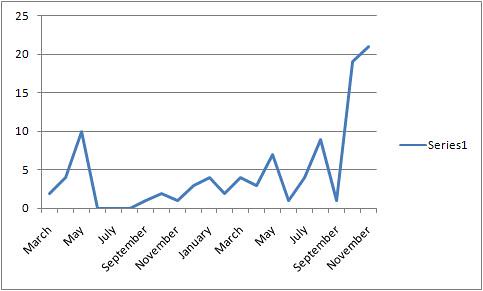
I'd noticed that my blogger account was showing 100 posts for this blog and to be honest I was a little surprised. I thought I'd go back and look at my posting habits. Check out the graph. When I started this blog, it was mainly so I could post amusing anecdotes of my travels around Italy back in May 2005. I'd been fed up of emailing everyone and missing people off, so I gave my friends the blog link and told them to read that for my misadventures. If you've been reading for a while, you'd noticed that after that trip I had nothing more to say. Then I started with a few bits and pieces until a few months ago when I started hitting the blog hard.
While I've been working in my current job, I've been absorbing more and reading lots which has culminated in my suddenly having quite a bit to say.
Now, sometimes I don't know if other people are having the same thoughts as me, or if I'm having the same thoughts of other people. Art reflecting life, life reflecting art and all that. But it seems people are being quite reflective of their own blogging.
uncov.com launches against bloggers who like to think their journalists. I don't think I'm in this category, I just find this gives me a place to ramble, and get my thoughts down.
Piotr and David have both commented on why they've not be blogging enough, and I'd say to that, that blogging to me is my mind dump. It's a place to get everything out. I'm not a journalist, and I certainly don't spend a great deal of time writing my entries. In fact, I'm with Scoble here, don't be afraid to be wrong or to look wrong. And if you're thinking about stopping your blog, think about your global microbrand.
Using Onaswarm.com or a solution to the Robbie Clutton problem
After some discussion on my previous entry (people do read my blog, cool), I'm happy to say that so far I'm pleased with onaswarm.com and the conversations coming from David Janes over there.
I tried out a few things which Cristiano wanted, like hosting the link in your own domain and building gadgets.
First, on my own (rarely used) home page I added an auto discovery RSS element, so the RSS icon appears in the address bar and points to my lifestream feed. I also added a new page to show just a gadget along with the auto discovery RSS feed. You could do similar things with a redirect straight to the feed, or use some XSLT to transform the feed to your own presentation.
As a lazy developer and human being, I had hoped someone had built something like this so I didn't need to. Thanks onaswarm, expect some feature requests from me in the future =)
I tried out a few things which Cristiano wanted, like hosting the link in your own domain and building gadgets.
First, on my own (rarely used) home page I added an auto discovery RSS element, so the RSS icon appears in the address bar and points to my lifestream feed. I also added a new page to show just a gadget along with the auto discovery RSS feed. You could do similar things with a redirect straight to the feed, or use some XSLT to transform the feed to your own presentation.
As a lazy developer and human being, I had hoped someone had built something like this so I didn't need to. Thanks onaswarm, expect some feature requests from me in the future =)
Friday, November 30, 2007
Becoming a Software Engineer
I was recently asked by a former disertation tutor to do a talk at my old university on being a software engineer at an open day for prospective university students. I was happy to oblige, and I've put up the slides on slideshare.net. However, in true Downey form there's not much in terms in written text, but there's more pictures and hopefully, engagement with the audience by the presenter.
This led to some interesting debates on my return to work, with some questioning the need to do a computer science degree at all. It seems there are plenty of people with other technical degrees that move into the software field, and seem to do rather well for themselves.
My take is that my degree was very vocational, and the things I learn't at university I apply directly to my job today. Also that I picked up a lot of theory and hopefully have a more rounded and thorough understanding of the technical problems we face. Hopefully. I have to say though that probably for each useful module I had, I had one useless module. Go figure, I could have tried harder at university, I could have learn't more, but I came out with a good degree and have a good job so no massive loss.
On reflection, a lot of the books I bought at uni are either sitting on my shelf largely unread or have been sold on eBay. But now adays I tend to read a lot of technical and 'business' books, so what would I recomend to prospective students?
'Technical books'
Agile web development with Rails - an excellent introduction to web programming in a cool language, though it leaves testing a little late.
'Business books'
Mavericks at work - a look at innovative solutions to common business problems.
Cluetrain Manifesto - how the web has changed business and made us communicate again.
Getting Real - 37 Signals answer to bloatware.
'Methodology books'
Practices of an agile developer - excellent practices to follow for an agile developer
Lean Software Development - lean and trim software development.
There's probably a whole bunch more I can't think/remember of and a bunch I'd like to read.
What would you recomend?
This led to some interesting debates on my return to work, with some questioning the need to do a computer science degree at all. It seems there are plenty of people with other technical degrees that move into the software field, and seem to do rather well for themselves.
My take is that my degree was very vocational, and the things I learn't at university I apply directly to my job today. Also that I picked up a lot of theory and hopefully have a more rounded and thorough understanding of the technical problems we face. Hopefully. I have to say though that probably for each useful module I had, I had one useless module. Go figure, I could have tried harder at university, I could have learn't more, but I came out with a good degree and have a good job so no massive loss.
On reflection, a lot of the books I bought at uni are either sitting on my shelf largely unread or have been sold on eBay. But now adays I tend to read a lot of technical and 'business' books, so what would I recomend to prospective students?
'Technical books'
Agile web development with Rails - an excellent introduction to web programming in a cool language, though it leaves testing a little late.
'Business books'
Mavericks at work - a look at innovative solutions to common business problems.
Cluetrain Manifesto - how the web has changed business and made us communicate again.
Getting Real - 37 Signals answer to bloatware.
'Methodology books'
Practices of an agile developer - excellent practices to follow for an agile developer
Lean Software Development - lean and trim software development.
There's probably a whole bunch more I can't think/remember of and a bunch I'd like to read.
What would you recomend?
Thursday, November 29, 2007
Stuffed or information overload
I'm stuffed, I feel like I've had three Christmas dinners in a row, I can't eat any more. No more fees for me please.
I seriously need a cull of the feeds in my reader, I can't keep up with everything that people are writing. I tend to have a habit of adding feeds left right and center when ever I read a good post/article. I like and want to be able to read good bloggers.
What to do?!?
I seriously need a cull of the feeds in my reader, I can't keep up with everything that people are writing. I tend to have a habit of adding feeds left right and center when ever I read a good post/article. I like and want to be able to read good bloggers.
What to do?!?
Wednesday, November 28, 2007
Lifestreaming or the Robbie Clutton problem
With horror (ok delight really), I read about the "Robbie Clutton" problem on Simon's blog. It's interesting how a disgruntled post seems to get more traction, but hey ho.
Check out that post, then come back.
Ok, finished?
Good.
Something I've been thinking about recently is how to make lifestreaming easier for everyone. At the moment, I've seen blogs about doing that using Yahoo! Pipes, which is cool, but let's make it easier.
Any volunteers to help build a life stream site welcome =)
Check out that post, then come back.
Ok, finished?
Good.
Something I've been thinking about recently is how to make lifestreaming easier for everyone. At the moment, I've seen blogs about doing that using Yahoo! Pipes, which is cool, but let's make it easier.
Any volunteers to help build a life stream site welcome =)
Sunday, November 25, 2007
How much is it worth?
I've always liked my gadgets and my entertainment, such as music and movies. Recently, these industries have struggled to keep up with the rapidly changing world around them. I've thought about this somewhat in the past (see: here and here) , but now my thoughts turn to: what would I be willing to pay for what kind of service?
Now, for example, Heroes, the awesome TV show is currently running the second series in the US, but the first season is only just finishing up in the UK. Luckily it's on BBC, so my TV license covers me to watch that, but really, why should I miss out on a digital product which is available in a different country, but now in my own country?
Let's get this straight, a show show/series/season is a product. It's something that you pay for, either through TV license, subscription or pay per view. It's not a traditional product, but it's something a lot of people pay for, hence the high cost for production companies to try to out do each other.
I might have lost out on this, take Lost for example. In the UK, it's on Sky first, and I'll be dammed if I'm paying £40p/m for something I don't need. I'll also be dammed if I'm going to pay £40 for the first half or even the whole season when it comes out on DVD. I might, however, be interested to pay a nominal amount to watch the stream of an episode. Hell, I might pay even more if I can download it and watch it where-ever. Why not take a leaf out of Radiohead's book and let me download the whole lot, week by week, and when available, send me a copy of the DVD release.
Yeah, I'd pay for that. I don't want to subscribe, I want to pay per view, and if that's through a consumer product like BT Vision, or Freeview then so be it. But, how about just using the web? And please, none of this DRM crap, I'd like to be able to watch the damm video on my Linux laptop while I'm traveling.
Word to the wise: I'm not going to pay for Sky, Cable or any subscription TV service. I'm not likely to buy a DVD of a TV series if I've seen it already, though I might take a chance if I've not seen it and it's reasonably priced. I am likely to pay for an on-demand/download service for high quality, HD content if I don't have to wait 9 months after it's shown on US television.
Time to get your act together, that includes you BBC!
Now, for example, Heroes, the awesome TV show is currently running the second series in the US, but the first season is only just finishing up in the UK. Luckily it's on BBC, so my TV license covers me to watch that, but really, why should I miss out on a digital product which is available in a different country, but now in my own country?
Let's get this straight, a show show/series/season is a product. It's something that you pay for, either through TV license, subscription or pay per view. It's not a traditional product, but it's something a lot of people pay for, hence the high cost for production companies to try to out do each other.
I might have lost out on this, take Lost for example. In the UK, it's on Sky first, and I'll be dammed if I'm paying £40p/m for something I don't need. I'll also be dammed if I'm going to pay £40 for the first half or even the whole season when it comes out on DVD. I might, however, be interested to pay a nominal amount to watch the stream of an episode. Hell, I might pay even more if I can download it and watch it where-ever. Why not take a leaf out of Radiohead's book and let me download the whole lot, week by week, and when available, send me a copy of the DVD release.
Yeah, I'd pay for that. I don't want to subscribe, I want to pay per view, and if that's through a consumer product like BT Vision, or Freeview then so be it. But, how about just using the web? And please, none of this DRM crap, I'd like to be able to watch the damm video on my Linux laptop while I'm traveling.
Word to the wise: I'm not going to pay for Sky, Cable or any subscription TV service. I'm not likely to buy a DVD of a TV series if I've seen it already, though I might take a chance if I've not seen it and it's reasonably priced. I am likely to pay for an on-demand/download service for high quality, HD content if I don't have to wait 9 months after it's shown on US television.
Time to get your act together, that includes you BBC!
The customer is always right, and now they've only got themselves to blame
Are you fed up of buying the same old crap from the same old places (for anyone who's been to my flat, please ignore the fact it looks like an Ikea showroom, just for now)? It seems that more power is being given to the people, more power, more choice, more voice!
Though I was taken my Barry Schwartz view on this (an excellent presentation I'm sure you'll agree), it seems now that the small guy is coming through, and they are giving people what they want. Something different.
Threadless.com is a great example here. A community driven clothes selling retail web site. Users can upload their designs and other users can vote for those. Winning* designs are printed by threadless for a limited run. Once those t-shirts sell, users can request another print run though at threadless's discretion. What an awesome idea.
Flicking through Saturday's Guardian, I come across another innovative, if similar idea. Essentially the same, except for household objects. People can upload designs of products and others can suggest changes and make comments. Once that product has a certain amount of votes (currently 1000), the business agrees to take on the design (unless it conflicts with copyright, health and safety laws etc) and create a batch to sell to retail channels. Now, this guy has just set up a channel agreement with Muji, a UK high street distributor. Instead of the threadless payback (kudos, plus some one off cash and gift vouchers - plus potentially more for re-prints and winning further competitions), the designer is given royalties on profits. How awesome is that. Both interesting models.
So now, not only can you buy something that's different, on a limited run, you can now potentially get your own ideas made for yourself and into the homes of others.
These sites let you contribute, but personalisation sites are doing well too, least we forget moo.com =)
*winning defined by threadless.com, not exactly sure what that is as I've not entered a competition
Though I was taken my Barry Schwartz view on this (an excellent presentation I'm sure you'll agree), it seems now that the small guy is coming through, and they are giving people what they want. Something different.
Threadless.com is a great example here. A community driven clothes selling retail web site. Users can upload their designs and other users can vote for those. Winning* designs are printed by threadless for a limited run. Once those t-shirts sell, users can request another print run though at threadless's discretion. What an awesome idea.
Flicking through Saturday's Guardian, I come across another innovative, if similar idea. Essentially the same, except for household objects. People can upload designs of products and others can suggest changes and make comments. Once that product has a certain amount of votes (currently 1000), the business agrees to take on the design (unless it conflicts with copyright, health and safety laws etc) and create a batch to sell to retail channels. Now, this guy has just set up a channel agreement with Muji, a UK high street distributor. Instead of the threadless payback (kudos, plus some one off cash and gift vouchers - plus potentially more for re-prints and winning further competitions), the designer is given royalties on profits. How awesome is that. Both interesting models.
So now, not only can you buy something that's different, on a limited run, you can now potentially get your own ideas made for yourself and into the homes of others.
These sites let you contribute, but personalisation sites are doing well too, least we forget moo.com =)
*winning defined by threadless.com, not exactly sure what that is as I've not entered a competition
Experiencing Customer Experience
I may be wrong here, but the only time I really know I'm experiencing customer experience is when something goes wrong. That something going wrong could be any part of the buying, or 'in life' experience. I wanted to tell a few stories of when something went wrong with me and my reactions to those experiences.
easyjet
I bought tickets to Barcelona for Tech Ed from Easyjet, but made the mistake of booking the wrong week. I don't know why, my mind was elsewhere or something. Anyhoo, I noted that to change a flight there's a charge applied, fair enough I though. When I booked however, I was shown prices which I believed were the new price flights before my flight prices had been deducted. Only after I'd gone through the whole process had I realised that I'd been charged that extra. To me it had looked like I'd paid twice. I contacted Easyjet and over several increasingly frustrating exchanges I had not got any compensation. I had believed I had been charged twice, they didn't even listen to my point of view, and instead pointed me to their T&Cs. Bad customer experience.
threadless.com
I'd made the stupid mistake of getting carried away by a threadless.com sale. All t-shirts for $10. At the time I was just about to move home, but instead of directing them somewhere sensible, like my parents, I got them delivered to my home that I was currently occupying. The package went missing in the post. When I contacted threadless they were suprisingly helpful. They asked me to wait two weeks just in case the package showed up. When they didn't, they offered a full refund! I took credit, as I wanted to order some more t-shirts and they gave me an additional $5 for my troubles! Even though I'd pretty much said I was most likely my fault! Good customer experience.
land of leather
When I'd moved into my new home, I was in need of a sofa/couch. As it happened I'd seen an ad for a sale in the land of leather. I went into the store and after a while, seen a cracking sofa. Paid for it and had it delivered the next week. Only it wouldn't fit through the door. Somehow this was my fault. I'd thought the sofa would come apart, surely this is a common problem, I mean I only life in a standard size house. That was the first problem, the second was that the delivery drivers expected to get paid. This pissed me off royally, why should I pay for a product I'd not received? They wouldn't even give a refund. Bad customer experience.
Round up
It's not all about the money, it's about the dialog. Land of leather and Easyjet refused to enter a dialog with me, which meant I didn't get what I wanted and damaged their brand in my eyes. Treadless.com entered a dialog with me and exceeded expections.
easyjet
I bought tickets to Barcelona for Tech Ed from Easyjet, but made the mistake of booking the wrong week. I don't know why, my mind was elsewhere or something. Anyhoo, I noted that to change a flight there's a charge applied, fair enough I though. When I booked however, I was shown prices which I believed were the new price flights before my flight prices had been deducted. Only after I'd gone through the whole process had I realised that I'd been charged that extra. To me it had looked like I'd paid twice. I contacted Easyjet and over several increasingly frustrating exchanges I had not got any compensation. I had believed I had been charged twice, they didn't even listen to my point of view, and instead pointed me to their T&Cs. Bad customer experience.
threadless.com
I'd made the stupid mistake of getting carried away by a threadless.com sale. All t-shirts for $10. At the time I was just about to move home, but instead of directing them somewhere sensible, like my parents, I got them delivered to my home that I was currently occupying. The package went missing in the post. When I contacted threadless they were suprisingly helpful. They asked me to wait two weeks just in case the package showed up. When they didn't, they offered a full refund! I took credit, as I wanted to order some more t-shirts and they gave me an additional $5 for my troubles! Even though I'd pretty much said I was most likely my fault! Good customer experience.
land of leather
When I'd moved into my new home, I was in need of a sofa/couch. As it happened I'd seen an ad for a sale in the land of leather. I went into the store and after a while, seen a cracking sofa. Paid for it and had it delivered the next week. Only it wouldn't fit through the door. Somehow this was my fault. I'd thought the sofa would come apart, surely this is a common problem, I mean I only life in a standard size house. That was the first problem, the second was that the delivery drivers expected to get paid. This pissed me off royally, why should I pay for a product I'd not received? They wouldn't even give a refund. Bad customer experience.
Round up
It's not all about the money, it's about the dialog. Land of leather and Easyjet refused to enter a dialog with me, which meant I didn't get what I wanted and damaged their brand in my eyes. Treadless.com entered a dialog with me and exceeded expections.
Thursday, November 22, 2007
Buying, Building and Open Sourcing
Stumbled across this great little post on Try Before You Buy Marketing, thanks to Doc Searls Thankslinking. It got me thinking about companies selling products they don't use themselves, there's got to me loads out there. Equally, there must be loads of companies that have products which are used within the company network that could be sold or open sourced, as well as companies who spend fortunes on buying products that could be obtained from the open source community.
Madness.
Madness.
Software engineers need love too.
It's amazing how a new environment, a ton of pressure and a bunch of uncertainty can make people react. I found out earlier this week how software engineers react. At a three day off site, a large group of people, both developers and 'suits', were told to leave their job titles at the door. Unfortunately for me and the team I was working with, it felt as if we'd left our software engineering principles at the door too.
Having essentially 48 hours to build a product, mostly from scratch, or at least using new products/APIs and services to plug something together seemed to suggest that we threw our best practices out of the window. Now the working environment wasn't set up exactly how we would have liked it, but we could have done something about that. Without even the basic necessity of source control, it felt as if the team were fire fighting from an early stage with USB drives being swapped around at crucial times, along with cries of "hey, can you add this method to the code?" when it could have been done easily and checked in.
I certainly felt like I was developing with one hand without using test driven development, source control, continuous integration et al. If three days being thrown into the deep end has taught me anything, its to be prepared.
I once heard the phrase, "a bad tradesman blames his tools", but conversely, does that mean that a tradesman is only as good as the tools he uses? Perhaps I've grown so used to the tools that I use that I've come to depend on them, and while that encourages best behaviour, does that make me inflexible?
Having essentially 48 hours to build a product, mostly from scratch, or at least using new products/APIs and services to plug something together seemed to suggest that we threw our best practices out of the window. Now the working environment wasn't set up exactly how we would have liked it, but we could have done something about that. Without even the basic necessity of source control, it felt as if the team were fire fighting from an early stage with USB drives being swapped around at crucial times, along with cries of "hey, can you add this method to the code?" when it could have been done easily and checked in.
I certainly felt like I was developing with one hand without using test driven development, source control, continuous integration et al. If three days being thrown into the deep end has taught me anything, its to be prepared.
I once heard the phrase, "a bad tradesman blames his tools", but conversely, does that mean that a tradesman is only as good as the tools he uses? Perhaps I've grown so used to the tools that I use that I've come to depend on them, and while that encourages best behaviour, does that make me inflexible?
Subscribe to:
Posts (Atom)